
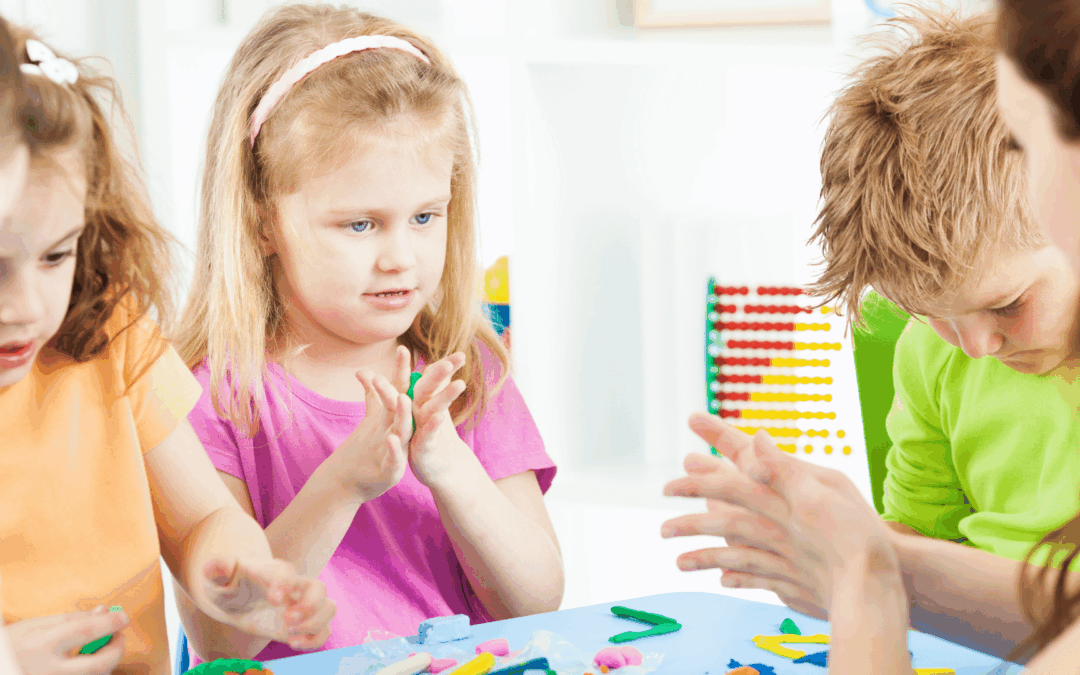
STEM and STEAM education may sound advance, but the foundations begin in early childhood. Preschoolers are natural scientists, constantly exploring how the world works through play, observation, and experimentation. Through hands-on learning experiences, young children build early science and problem-solving skills in meaningful and engaging ways.
At this age, children are curious about everything. They ask questions, test ideas, and try new approaches without fear of mistakes. A quality preschool environment encourages this natural curiosity, helping children develop confidence as they explore science, technology, engineering, art, and math through everyday experiences.
Why STEM Matters in Preschool
STEM education supports curiosity, critical thinking, and creativity. For young children, STEM concepts are introduced through play and exploration rather than formal instruction or worksheets. Learning happens through doing, touching, experimenting and discovering.
When children pour water, build structures, or plant seeds, they are learning about cause and effect, balance, measurement, and growth. These experiences lay the groundwork for future learning without pressure. Children begin forming early science skills simply by observing what happens when they mix colors, stack blocks, or watch plants grow.
STEM learning also encourages persistence. When a tower falls or a structure does not stand, children try again. This problem-solving mindset helps children understand that mistakes are part of learning. Over time, they build resilience and confidence as they work through challenges.
Another important benefit of STEM activities is collaboration. Many experiments and building projects involve teamwork, helping children practice communication and cooperation while learning.
How Preschoolers Learn STEM Concepts
- Water Play
Water tables teach volume, movement, and basic physics concepts as children pour, scoop, and observe how water flows through containers and tubes.
- Block building
Building structures supports early engineering skills and problem-solving as children experiment with balance, size, and stability.
- Gardening
Planting seeds introduces biology concepts while teaching responsibility and patience as children observe growth over time.
- Art integration
Art projects encourage creativity while connecting to science concepts such as color mixing, texture and design.
- Exploration and questioning
Encouraging children to ask questions and predict outcomes builds curiosity and confidence in learning through experimentation.
Through these playful experiences, children learn to think critically while still enjoying the fun and creativity of preschool learning. STEM learning does not require complex materials. Everyday classrooms tools and simple experiments can spark meaningful discovery.
How we support STEAM
At (PRESCHOOL NAME), STEAM learning is part of everyday play. Teachers carefully prepare hands-on experiences that invite children to explore, ask questions, and experiment freely. Activities are designed to match children’s developmental stages so learning feels natural and exciting.
Art, science, movement, and problem-solving activities are integrated throughout the day to support the whole-child development. Teachers encourage children to describe what they observe, predict what might happen next, and test their ideas through exploration.
Children are supported as they try new ideas, make adjustments, and discover solutions. Instead of giving an answer immediately, teachers guide children to think through challenges and build confidence in their ability to learn through experience.
This playful approach ensures that learning remains joyful while still developing important early science and math skills that prepare children for future academic success.
Early STEM learning nurtures curiosity, creativity, and confidence. When children are encouraged to explore freely and experiment, they develop problem-solving skills that support lifelong learning and academic readiness.
Families interested in a preschool that values hands-on STEAM education and encourages curious learners are invited to book a tour at (PRESCHOOL NAME) to see how exploration and discovery are part of everyday learning.